Writing Your First Picture Book: What to Include in Illustrations
Pat Hutchins’s Rosie’s Walk has 32 words. Rosie the hen goes “across the yard, around the pond, over the haycock” and gets home in time for dinner. The text never mentions the fox. He’s on nearly every page of the pictures, stalking her and getting a rake in the face, a dunk in the pond and a sack of flour on his head. Children love the book because they know something the words don’t say.
It’s a good lesson for anyone writing a first picture book. The words and the pictures share the storytelling, and a lot of first manuscripts make the mistake of putting everything into the words.
What the words should do
The text carries the things a picture can’t show well. That includes the narrator’s voice, the rhythm of a sentence read aloud, what characters say to each other, and what a character thinks or wants. It also carries time: “the next morning,” “a year later,” “every night for a week.”
Read your manuscript aloud and listen. Picture book text gets read many, many times by a tired adult at bedtime, so it should sound good in the mouth.
What the pictures should do
The illustrations can carry almost everything else:
- What the characters look like, so you never need to write “she had curly red hair.”
- Where the scene takes place and what the weather is doing.
- The action, especially physical comedy.
- How characters feel, through faces and body language.
- The counterpoint, when the picture shows something the words don’t, as with Rosie’s fox.
Maurice Sendak does something clever with this in Where the Wild Things Are. As Max’s imagination takes over, the illustrations grow larger page by page until the wild rumpus fills whole spreads with no words at all. The pictures take over because the story has moved beyond words.
What to put in your illustration notes
Once you know which job belongs to the pictures, go back through your manuscript and cut any sentence the illustration will already show. Then add a short note in brackets wherever the picture needs to show something the text leaves out.
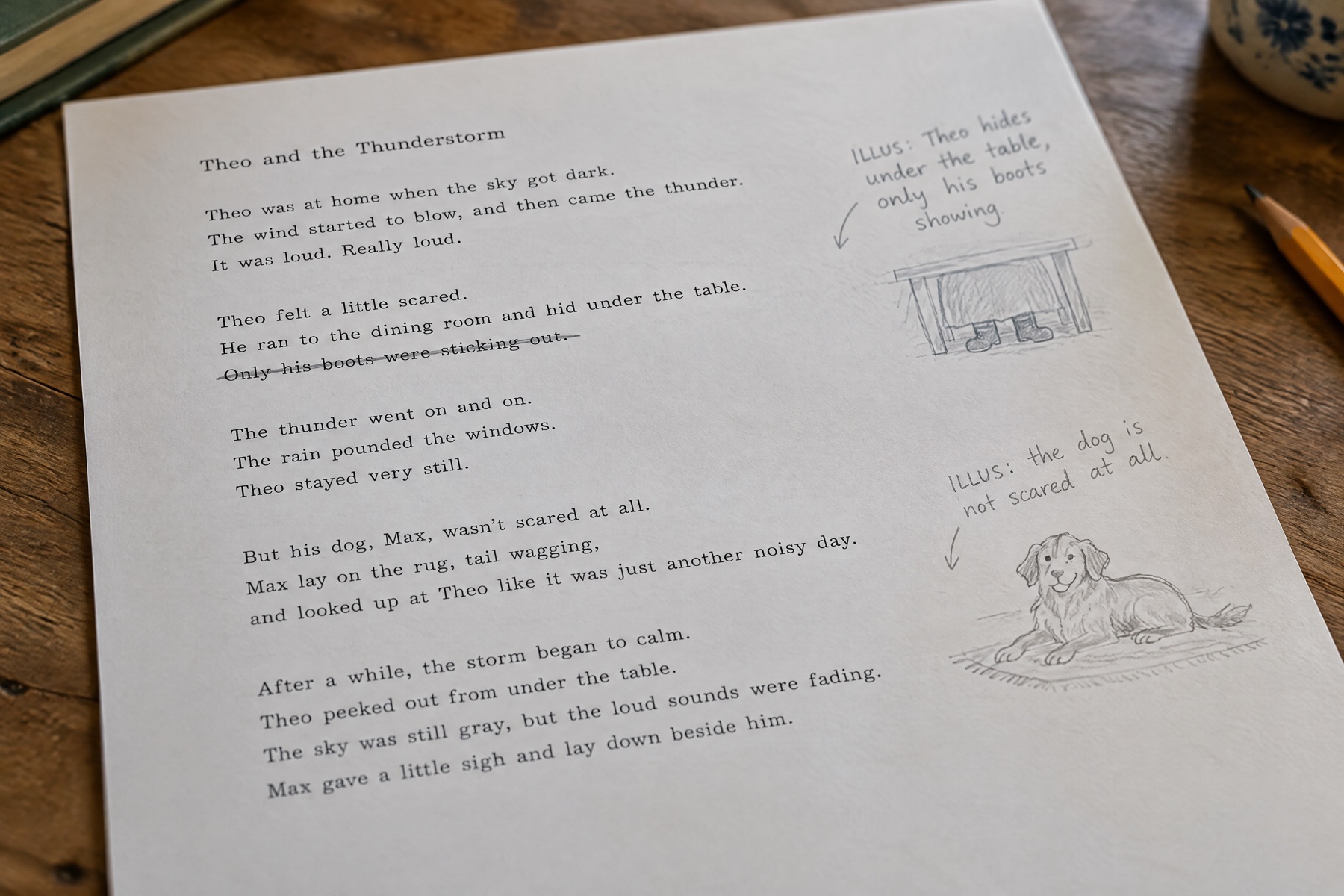
A typed picture book manuscript with handwritten pencil illustration notes in the margin, one sentence crossed out because the picture will show it
Keep notes rare and specific. If you’re submitting to a traditional publisher, they’ll pair your text with an illustrator and won’t want every picture dictated. A note belongs wherever the story would make no sense without it. “Theo hides under the table, only his boots showing” earns its place. “Theo is wearing a green shirt” doesn’t.
Keep the main character recognizable
Because pictures carry so much emotion in a picture book, the main character’s face and body language matter a great deal. The same child might be frightened on one spread, delighted on the next and proud by the end. Readers need to recognize them instantly every time, and to read how they feel without a word of explanation.
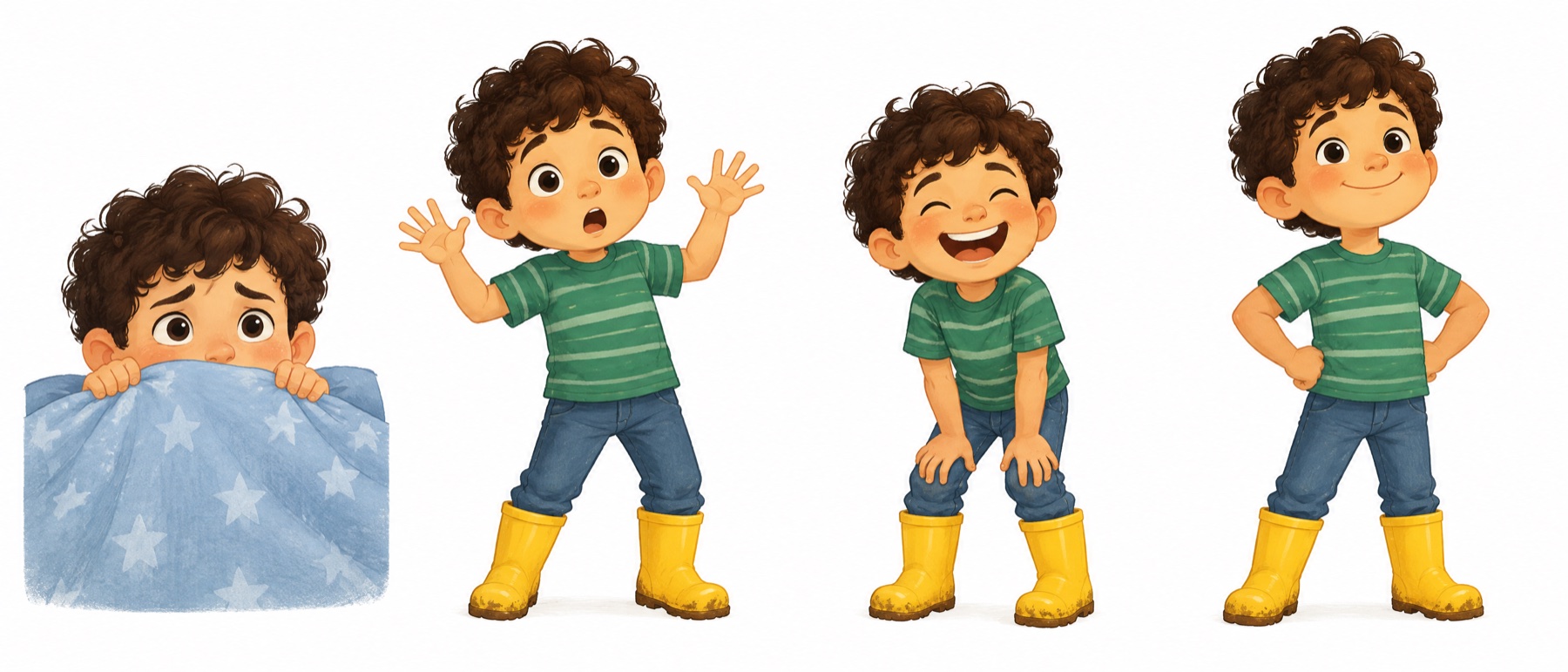
The same cartoon boy with curly hair, a green striped t-shirt and yellow rain boots shown four times: peeking worried over a blanket, surprised, laughing and standing proud
Test your scenes before you commit
Even if you plan to hire an illustrator, it helps to see rough versions of your scenes. You’ll find out whether a page turn works, whether a spread is too crowded, or whether a sentence repeats what the picture already says.
Until recently, authors who couldn’t draw had to imagine all of this. Now there are tools that can generate picture book illustrations from your own descriptions. With Neolemon, for example, a first-time author can create the main character once, then change one thing at a time, such as the pose, the expression or the background, while the character stays the same. That makes it easy to try two versions of a scene, say Theo hiding under the table or Theo peeking from behind the curtain, and see which one tells the story better next to your text.
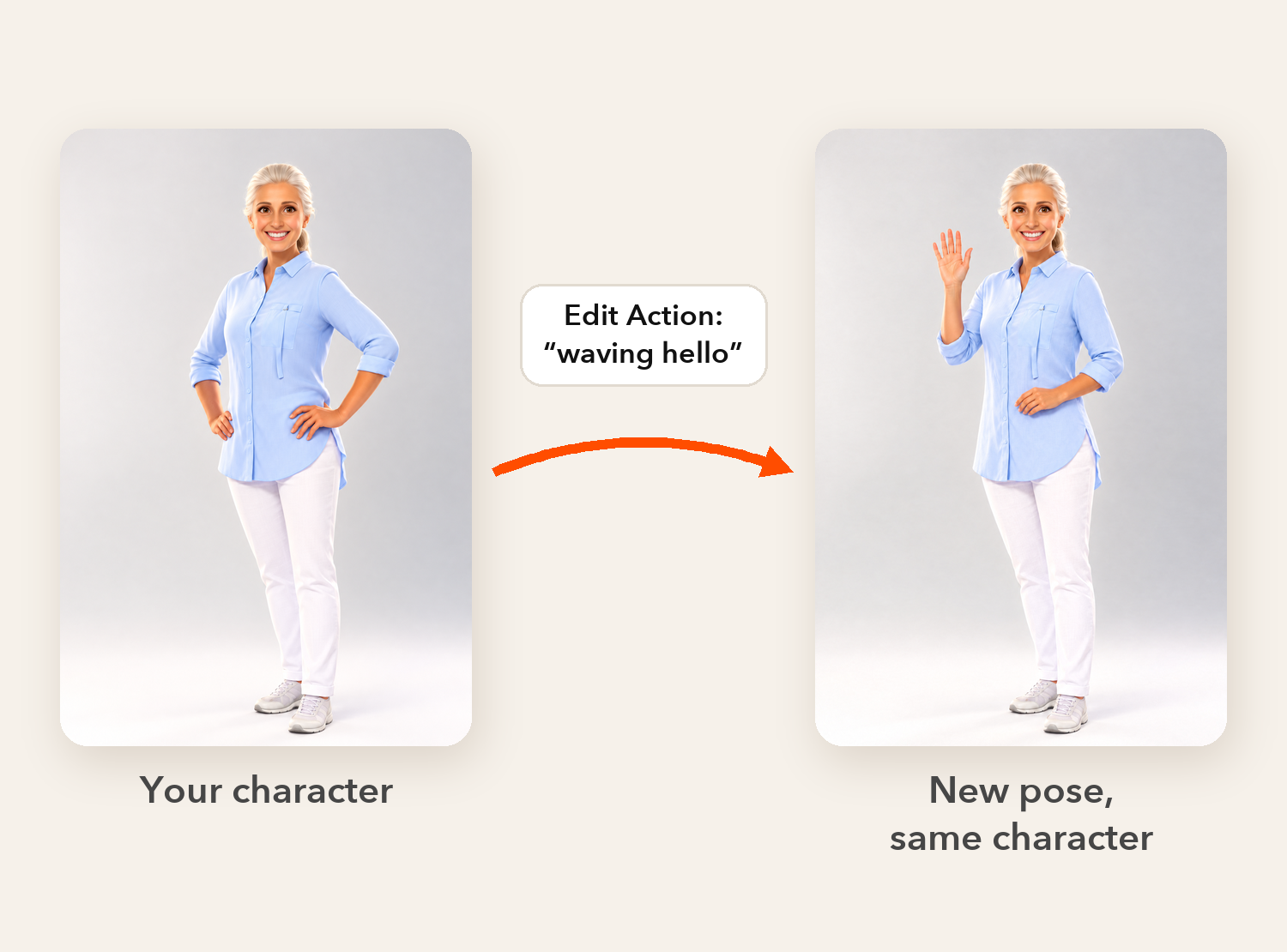
A cartoon woman before and after an Edit Action change to “waving hello”, showing a new pose while the character stays the same
Whether those images end up in the finished book or just guide a professional illustrator, the exercise teaches the main lesson of picture book writing. Write the words that only words can say, and trust the pictures with the rest. Hutchins managed it in 32 words.