Juliusz Słowacki (4 September, 1809-3 April, 1849) was one of the “Three Bards” of Polish literature, a major figure in the Polish Romantic period.
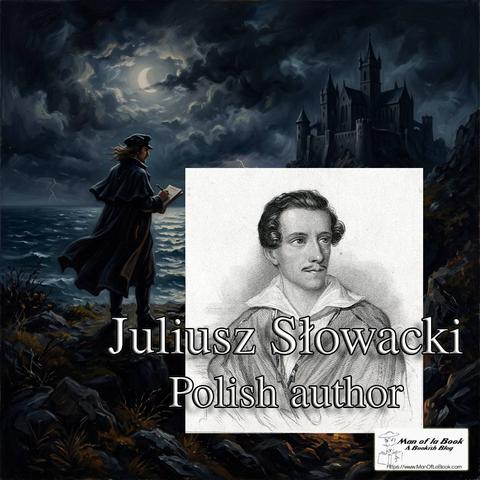
1. Juliusz Słowacki was born in Kremenets, a town which was part of the Polish-Lithuanian Commonwealth, then Russia, and now Ukraine.
2. His father Euzebiusz Słowack, was a Polish nobleman and a teacher of poetry, literature, literary history, and rhetoric. Mr. Słowack died when young Juliusz was five and his mother, Salomea Słowacka, married a professor of medicine and running a literary salon that exposed her young son to the art form and the artists.
3. Juliusz Słowacki was educated at a Vilnius Imperial University preparatory gymnasium in Vilnius and was studying to be a lawyer. He moved to Warsaw in 1829 and found a job as a government employee at Congress Poland’s Governmental Commission of Revenues and Treasury.
4. Mr. Słowacki’s first novel, Hugo, was published in 1830 in the periodical Melitele. The next year he joined the Polish National Government and was sent on a diplomatic mission to Dresden. He was already a known poet at the time.
5. He was part of three National Poets, or Bards, of 19 Century Poland. This was the time when Poland did not exist on the world’s maps, and the three bards, Juliusz Słowacki, Adam Mickiewicz and Zygmunt Krasiński were not just seen as poets, but as spiritual prophets.
6. Not all was well with the Three Bards. Juliusz Słowacki and Adam Mickiewicz’s feud would have been legendary even by today’s standards. They fought over who is the “true voice” of Poland, openly dissing one another. Mr. Mickiewicz publicly called Mr. Słowacki’s early poetry a “beautiful church with no God inside.” Not to be outdone, Mr. Słowacki spent a lot of time writing brilliant, and literary, counter attacks to prove Mr. Mickiewicz wrong.
7. Adam Mickiewicz’s play, Forefathers’ Eve (Dziady) promoted the idea that Poland was the “Christ of Nations”, which is destined to suffer quietly. This idea enraged Juliusz Słowacki so much that he wrote the 1834 drama Kordian which concerned a protagonist that passively passes over martyrdom and decides to personally assassinate Tsar Nicholas I.
The play, Kordian, is considered one of Mr. Słowacki’s masterpieces.
8. Many of the writers I wrote my Fun Facts Friday posts about were “starving artists”, more or less. Not Mr. Stowacki however. He was a savvy and astute stock market invester which made him financially independent.
9. Between 1836-1837 Mr. Słowacki embarked on a journey through the Middle East. He stopped at Greece, Egypt, Palestine (part of the Ottoman Empire), and Syria. His time spent inside the Tomb of Agamemnon in Greece inspired his poem Grob Agamemnona.
10. During his last years, Juliusz Słowacki was determined to help Poland win back it’s independence, a movement including his good friend Frédéric Chopin. Even though he was not healthy, he traveled with friends to Poznań, hoping to participate in the upcoming uprising. The revolt, however, was crushed by the Prussian Army.
Zohar — Man of la Book
*Amazon links point to an affiliate account
Sources:
Juliusz Słowacki | Wikipedia
Juliusz Słowacki | Romantic poet, Dramatist | Britannica
Juliusz Słowacki – Biography | Artist | Culture.pl