Cursive writing is a flowing style of handwriting in which letters are connected to make writing smoother and more efficient. Its history stretches back thousands of years, long before modern English and today’s handwriting styles existed. Ancient scribes developed faster forms of writing for everyday records, while Roman, medieval, and Renaissance scribes continued to refine connected handwriting.
Over the centuries, styles such as Roman cursive, Carolingian minuscule, Italic, Copperplate, Spencerian, and the Palmer Method shaped the development of Western handwriting. New writing tools, printing, education, typewriters, and computers also changed how people wrote.
Although cursive is less common today, it remains useful for handwriting practice, signatures, personal writing, historical documents, and creative expression.
In this guide, we’ll explore the history and evolution of cursive writing, from its ancient origins to its place in the digital age.
What is Cursive Writing?
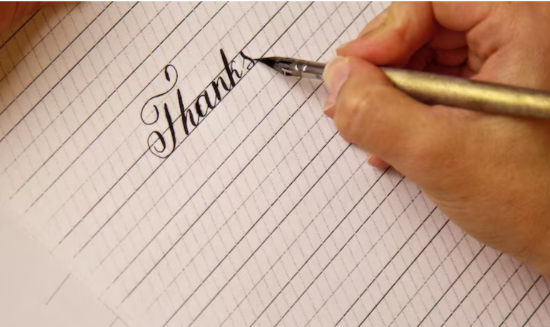
Cursive writing is a style of handwriting in which letters are written with flowing strokes, often connecting one letter to the next. The goal is to make handwriting smoother and more efficient by reducing unnecessary pen lifts. Unlike print writing, where letters are usually formed separately, cursive uses connected movements to create words.
Cursive does not always mean that every letter must be joined. In formal cursive, most letters are connected, while casual handwriting may include breaks and pen lifts. Different cursive styles can also use loops, slants, curves, and other distinctive letter forms.
The exact appearance of cursive varies between countries, languages, and handwriting systems. Styles such as Italic, Spencerian, Copperplate, and Palmer Method demonstrate how cursive has changed over time. Despite these differences, they share the basic idea of creating a continuous, flowing form of handwriting.
Where Did Cursive Writing Begin?
Cursive writing does not have a single inventor or exact starting point. It developed gradually as people looked for faster and more efficient ways to write by hand.
Some of the earliest examples come from ancient Egypt, where scribes used hieratic script, a simplified form of hieroglyphics for everyday writing. Demotic script later developed as a more streamlined form used for administrative, legal, business, and personal documents.
Cursive writing also developed in ancient Rome. Roman cursive was used for everyday communication and records, often on papyrus and wax tablets. Its flowing strokes and reduced pen lifting made writing quicker.
These early scripts were not the same as modern cursive, but they established the basic idea of simplifying and connecting strokes for faster handwriting. This principle continued to shape cursive through the Middle Ages, Renaissance, and later periods.
Cursive Writing in Ancient Egypt
Some of the earliest examples of simplified, flowing handwriting come from ancient Egypt. Egyptian scribes needed a faster alternative to detailed hieroglyphics for everyday records, which led to the development of hieratic and later demotic scripts.
Hieratic Script
Hieratic script was a simplified form of Egyptian hieroglyphics used by scribes for practical writing. It was commonly written with reed pens and ink on papyrus and was used for administrative, religious, and other everyday documents. Its simpler forms allowed scribes to write much faster than with detailed hieroglyphic signs.
Demotic Script
Demotic script developed from earlier Egyptian writing traditions and became widely used from around the 7th century BCE. It was more abbreviated and flowing than hieratic and was used for business, legal, administrative, and personal documents.
Cursive Writing in Ancient Rome
The Romans developed their own cursive handwriting for everyday communication and record-keeping. Roman cursive is generally divided into Old Roman Cursive and New Roman Cursive.
Old Roman Cursive
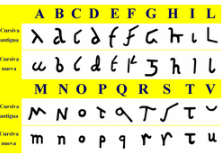
Old Roman Cursive was used for letters, business records, school exercises, and other everyday writing. Writers used materials such as wax tablets and papyrus, while quick strokes and occasional ligatures helped reduce writing effort.
New Roman Cursive
New Roman Cursive emerged around the 3rd century CE and featured more recognizable and consistent letterforms. Some of its forms, particularly a, b, d, and e, resemble later lowercase letters. It became an important link between ancient Roman handwriting and later Western scripts.
Cursive Writing During the Middle Ages
During the Middle Ages, handwriting developed across monasteries, scriptoria, courts, and administrative centers. Scribes created different styles for copying books, recording legal matters, and writing everyday documents.
Carolingian Minuscule
Around the late 8th and early 9th centuries, Carolingian minuscule became an important writing style during the reign of Charlemagne. It emphasized clear letterforms, consistent spacing, and readable lowercase letters. Although not highly cursive, it strongly influenced later European handwriting and modern lowercase forms.
Gothic Cursive
From the 12th century onward, Gothic scripts became widespread in Europe. Their compact and angular forms helped scribes save space on parchment. Faster Gothic cursive varieties were also used for business, legal, and personal documents, with styles varying across different European regions.
Cursive Writing During the Renaissance
The Renaissance brought a shift toward clearer and more elegant handwriting. Humanist scholars favored open, readable forms inspired by earlier manuscripts, moving away from the dense appearance of many Gothic scripts.
The Development of Italic Script
Italic script developed in Italy during the Renaissance and became known for its rightward slant, simple letterforms, and efficient connections. Niccolò Niccoli influenced its development, while later writing masters such as Ludovico degli Arrighi helped refine and popularize it.
Italic combined speed, readability, and elegance, making it an important influence on later cursive handwriting styles.
Cursive Writing in the 20th Century
During the early 20th century, cursive writing remained an important part of school education. Students practiced penmanship to develop clear, consistent handwriting, and methods such as the Palmer Method became widely used.
As education changed, handwriting instruction also evolved. Schools gradually gave more attention to subjects such as science, mathematics, and later computer skills. This reduced the time available for traditional handwriting practice.
Why Did Cursive Writing Decline?
Several changes contributed to the decline of cursive writing:
- Typewriters: Businesses increasingly used typed documents instead of handwritten correspondence.
- Ballpoint pens: Cheap and convenient, they made simple printing and handwriting easier for everyday use.
- Personal computers: Word processors gradually replaced handwriting for school, work, and business documents.
- Changing school priorities: More classroom time was devoted to new academic and technical subjects.
- Typing skills: Keyboard proficiency has become increasingly important as computers have entered schools and workplaces.
- Digital communication: Email, messaging, and smartphones further reduced the need for handwritten communication.
Cursive Writing in the Digital Age
The rise of computers and smartphones made cursive less common in everyday communication. Many schools reduced or changed cursive instruction as digital literacy and typing became essential skills.
In the United States, the Common Core State Standards did not specifically require cursive writing, leaving decisions about cursive instruction largely to states and school systems. This contributed to renewed debate over whether students should continue learning cursive.
Supporters point to practical and cultural reasons, including the ability to read historical handwritten documents, letters, and original records. Critics argue that limited classroom time should focus on skills students use more frequently in a digital world.
The Revival of Cursive Writing
Cursive has not disappeared. In recent years, interest in handwriting has grown as educators, parents, and communities have renewed attention to traditional writing skills.
Some schools have brought cursive back into the classroom, while others continue to offer it as an additional skill. Handwriting practice can also support fine motor development, writing fluency, and hand control in children.
Research has also increased interest in the relationship between handwriting, learning, and memory, although the benefits should not be overstated as unique to cursive. Beyond education, cursive remains popular for journaling, calligraphy, creative lettering, signatures, and personal expression.
As a result, cursive is increasingly viewed not as a replacement for digital skills, but as a complementary handwriting skill with educational, practical, and cultural value.
Why Is Cursive Writing Still Important Today?
Cursive writing continues to offer practical and educational value. Learning cursive writing helps children develop handwriting fluency, fine motor control, and consistent letter formation. Its connected strokes can also encourage a steady writing rhythm and reduce frequent pen lifts.
Cursive is also useful for reading historical documents, handwritten letters, and older records created before digital communication became common. Recognizing cursive handwriting makes these sources easier to understand and appreciate.
For many people, cursive provides a form of personal expression. Signatures, journals, handwritten notes, greeting cards, calligraphy, and creative lettering all continue to use flowing handwriting.
Cursive also works alongside modern digital skills. Learning both handwriting and keyboard skills gives students more ways to communicate, learn, and express themselves.
Conclusion
The history of cursive writing shows how handwriting has continually changed to meet the needs of its time. From hieratic and demotic scripts in ancient Egypt to Roman cursive, medieval handwriting, Renaissance Italic, and later styles such as Spencerian and the Palmer Method, each stage made its own contribution to the development of connected writing.
Technology eventually reduced the everyday need for cursive, but it did not make it irrelevant. Cursive still has a place in education, handwriting practice, signatures, personal writing, creative expression, and historical documents.
Today, cursive can complement rather than compete with digital communication. Understanding its history also helps us appreciate why this traditional form of handwriting has survived for thousands of years and continues to be practiced today.